When a retaining wall starts leaning, the fence on top of it usually goes with it. Doing both in one job often makes sense — the fence has to come off to replace the wall anyway. But no two of these jobs cost the same, so we don't publish a rate. These are the things that move the price.
What changes the cost
- Wall height. We build retaining walls up to 1 metre, including footings, drainage and backfill. Engineering and approval requirements also depend on boundaries, loads and site conditions, not height alone. For taller walls we coordinate the engineered wall build.
- Wall length and material. How many metres, and what the new wall is built from.
- Removing the old wall. Demolition, and getting the old material off site.
- Access. The narrowest point a machine has to get through. On tight sites a smaller machine takes longer.
- Drainage. Agricultural drain, gravel backfill and where the water ends up.
- The fence. Length, type and whether it's coming down and going back up, or being replaced new. Shared boundary fences need the neighbour involved.
- Levels. Whether the ground behind the wall is being cut back, filled, or left as is.
A real example: Highland Park
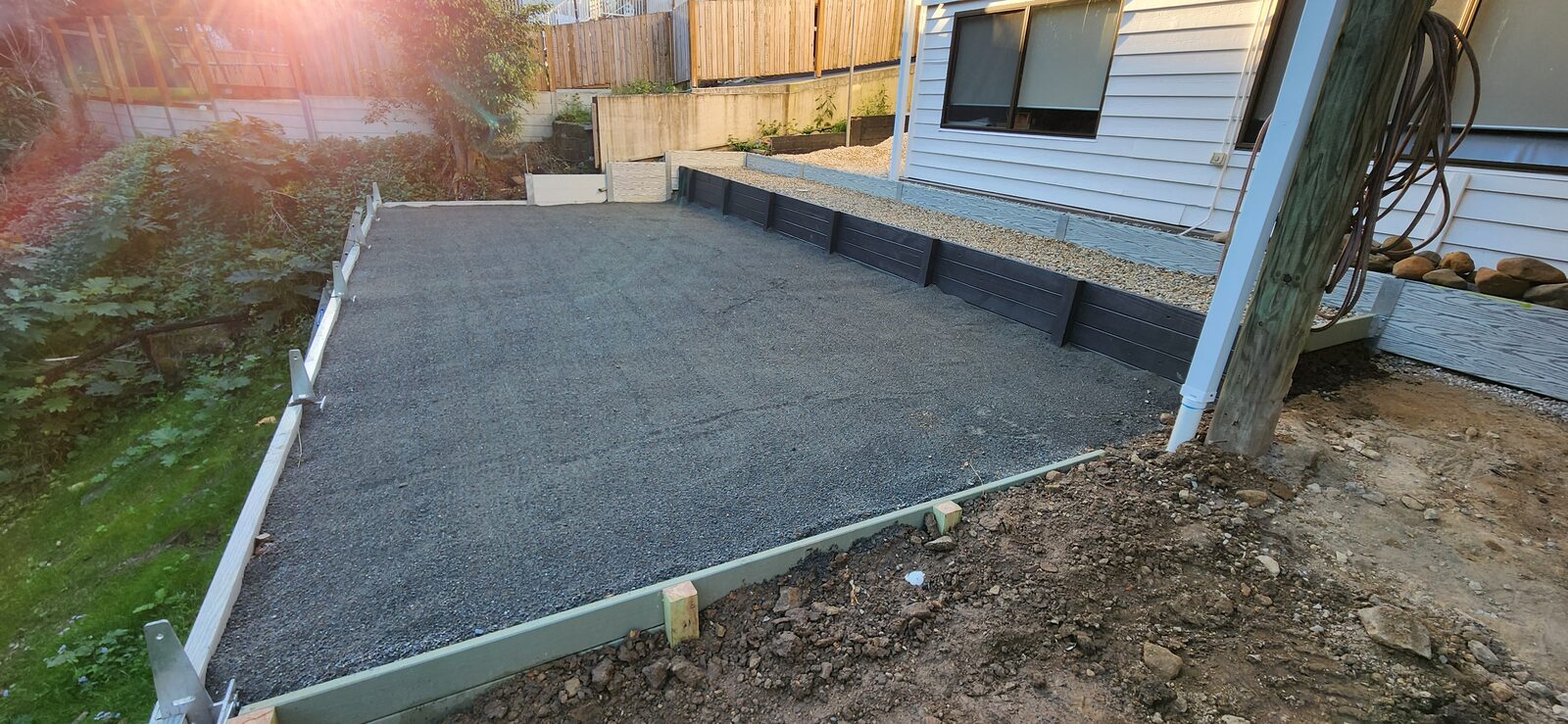
At Highland Park the access was down a steep, narrow hill — only our 1.7-tonne excavator could fit. Over six days we levelled the backyard, brought in fill, built the retaining walls and finished a pebble and crusher dust pool pad, working around a patio build at the same time. The fencing is pending and will be done on a return visit, so this isn't a completed wall-and-fence job yet. See the project.
What to send for a quote
- Photos of the wall and fence from both ends and from the high side
- Rough wall height and length (paced out is fine)
- Access width at the narrowest point
- Any drainage problems — where water sits or runs
- Your suburb, and whether the fence is shared with a neighbour
Use our landscaping quote form — or see more on the landscaping and retaining page.